


Black America Rewind: 1920s
Dec 10, 2025
9 min read
Updated: Dec 16, 2025
Our history will not be erased. In this weekly series, we'll focus on important Black American history from the 1920s to the 1990s. Full posts are available here, but you can follow along with the abridged versions on Instagram, too.

The beginning of the 1920s saw the tail-end of multiple Influenza pandemics, the post-WW1 manufacturing boom, and the rise of consumerism. Black America brimmed with pride and ambition, forged new alliances, created new opportunities, and yet still faced the same obstacles of past decades. Here's a breakdown of the era.
Like with every decade we'll study in this series, the 1920s would not only impact the future, but were a culmination of past events and ideas.

Important 1920s Black American Events
The New Negro Movement
Coined thanks to the first Black-American Rhodes Scholar, Alain Locke
Locke was born into an elite black family in Philadelphia in 1885 and graduated from Harvard in 1907
His 1925 article Harlem, Mecca of the New Negro both popularized the notion of the Harlem Renaissance and the Negro. The article was expanded into the 1925 anthology The New Negro: An Interpretation
Building up the race meant societal and cultural elevation, confidence, and being politically aware
The nucleus of this movement was the black population in Harlem, which grew over 40% between 1910 and 1930, from 50,000 to over 200,000 people.
In addition to a new identity-based politics, artists, writers, and musicians realistically depicted black American culture in stark opposition to white stereotypes and media like The Birth of a Nation.
This Renaissance existed not just in Harlem, but in places like Chicago and Paris

The 19th Amendment
In 1920, Black Americans and women gained the right to vote, though approximately 75% of Black Americans were kept from voting by poll taxes and literacy tests. The threat of the black vote galvanized white supremacist activity-- which in turn accelerated the fight for civil rights.
The Great Migration

Due to codified racism, violence, and poor job opportunities, millions of black Americans relocated North from 1910 until 1970, leading to waves of white riots like 1919's Red Summer and political backlash. Most black families ended up in New York, Chicago, Detroit, St. Louis, & California. This wasn't the only thing to change demographics. Additionally, approximately 100,000 Black immigrants from the Caribbean were living in the United States by 1930. Many of them ended up in New York, Miami, and Boston, where their cultures would fuse with the descendants of enslaved Africans

1920s Quick Facts & Cost of Living
Black Population: 10.5 Million in 1920
National Birth Rate (1920): 35 per 1000 women, with Black fertility slightly higher in the South than in the North
National Marriage Rate: Peaked at 92.3% in 1920, with black marriages slightly more common than white ones
National Divorce Rate: 1.7 per 1000 marriages
Interracial Marriage Rate: Statistically insignificant
Average National Income: $3200 BUT this data is skewed by unfiled tax returns and black people being paid less on average than whites. Half of all Americans made less than $2000 a year.
Most Common Jobs: Sharecroppers, train porters, maids, caregivers, manual laborers, educators, factory workers

Important 1920s Ideas
Labor
The Communist Party USA was founded in 1919 and promoted labor organizing
In the 20s, the concept of joining a labor union and collectively bargaining with an employer for better wages and conditions really blossomed
The Communist Party established the American Negro Labor Congress in 1925, hoping to entice black Americans by promoting voting, campaigning against lynching, and being anti-Jim Crow. It became the League of Struggle for Negro Rights in 1930
Racist labor leaders and the mainstream media were hostile
Unionizing The Pullman Porters

Beginning in the 1860s, the Pullman Company hired black men who worked for meager tips aboard their trains.
Businessman George Pullman intentionally wanted to foster an upper-class experience for his white customers by employing exclusively black porters, most of whom were formerly enslaved. He wanted them to be subservient like they were doing slavery.
The porters were called "George", emotionally abused, and charged for items stolen by passengers
Because of the possibilities of tips and regular in-demand work (combined with unionization), the Pullman Porters were a crucial foundation of the burgeoning black middle class
Their extensive travels and frequent encounters with new people (along with the ability to eavesdrop) meant they were important channels of fresh ideas, politics, and news for their communities
On August 25, 1925, the Brotherhood of Sleeping Car Porters was founded by A. Philip Randolph to demand labor rights. It was the first official black labor union, and was not officially recognized by the Pullman Company until 1937, when a new labor agreement was reached.
Future Civil Rights activist Edgar D. Nixon joined the union in 1928 and helped expand it
Pan-Africanism
The promotion of solidarity amongst people of African descent was a recurring theme among Black Americans after the Haitian Revolution
While some thinkers advocated a return to Africa, this was not a universal sentiment. All, however, encouraged black people of all diasporas to take pride in their history and culture
Key Influencers: Edward Wilmot Blyden, George Padmore, Marcus Garvey, H. Sylvester Williams
When Danish West Indies-born Edward Wilmot Blyden moved to America in 1850 and faced racism when trying to attend college, he moved to Liberia the following year and began publishing Pan-African literature. During frequent trips to America, he tried to convince Black Americans to move back to Africa and participate in its development
In 1897, Trinidadian lawyer H. Sylvester Williams founded the African Association, which later became the Pan-African Association. The organization held the first Pan-African Conference in London in 1900. It was attended by notable black delegates from across the world, including W.E.B. Du Bois, who went on to form the Pan-African Congress
Jamaican-born immigrant Marcus Garvey founded the United Negro Improvement Association in 1914. It had over 700 branches in the United States by the mid-20s and claimed to have at least 6 million members globally
Trinidadian-born George Padmore immigrated to America in 1924, where he studied medicine and joined the Communist Party. He became an important ideologue for Pan-Africanism in the 30s and beyond.
Anti-Lynching Legislation
Though the number of lynchings peaked at 292 in 1892, the acts of terrorism and murder continued throughout the early-mid 20th century (Nadir of American Race Relations).
In 1918, U.S. Representative Leonidas Dyer from Missouri drafted an anti-lynching bill to make the practice a federal crime
Beginning in 1922, the NAACP’s Anti-Lynching Crusaders raised nearly $11,000 to support the passage of the Dyer Anti-Lynching Bill.
The bill passed the House of Representatives 230 to 119 on January 26, 1922
The bill never passed the Senate thanks to a filibuster by Dixiecrats, and there were at least 281 documented lynchings in the 1920s.

1920s Racism Tracker
Sterilization
From 1907 to 1932, thirty-two states enacted forced sterilization laws. The 1927 Supreme Court case Buck vs Bell permitted the forced sterilization of mentally disabled people and other ‘undesirables.’ This legislation inspired Nazi Germany.
Most programs initially targeted poor white women, but a shift occurred in the post-World War II era, when states targeted more black women [See: The Sterilization and Abuse of Black Women]
Prohibitionists Leveraged Racism
While a wave of “Dry Laws” swept the South in the first decade of the 20th century (with support from black and white moralists), the ratification of the 18th Amendment in 1920 rested heavily on racist beliefs that black people couldn’t be trusted to drink liquor. The Southern Publicity Association worked for both the temperance movement & the Klan.
Massacres
The destruction of black communities was a constant threat in the 1920s, exhibited by Tulsa, Oklahoma aka 'Black Wallstreet' in 1921 and Rosewood, Florida in 1923.
Black Music Vilified as Evil
As Black Americans innovated the popular music known as Jazz, preachers and moralists claimed that jazz would not just make good white women immoral, but that it would lead to illicit interracial romance and sex. They pointed to integrated nightlife venues in urban areas as proof. While Black music was profitable & exploitable for Race Record labels, it enraged white separatists.
The KKK Rises Again

After the 1915 racist propaganda film The Birth of a Nation, the Ku Klux Klan actively campaigned for new members. So, Klan activities resurged and peaked in direct political power in the 1920s. One of it’s primary goals was emphasizing the protection of white women. The new Klan was organized and used publicists. While roughly 30,000 Klan members marched on Washington in 1925, there were over 3-8 million active members and even more sympathizers in the 1920s nationwide from the South to Detroit to Denver.
1920s Black Education Fast Facts

Mississippi was the last state to enact compulsory schooling in 1918, meaning more children than ever before received some form of education in the 1920s
The conditions of these schools were terrible due to overcrowding, inadequate maintenance, poor funding, and whitewashed lessons
According to Russell G. Brooker, most black Americans in the South left school after the 4th grade in the 1920s
The black literacy rate rose, with the approximate percentage of illiterate black adults falling from 30% in 1910 to 23% in 1920
The president of Sears, Julius Rosenwald, had been encouraged by Booker T. Washington to invest in black schooling. Between 1912 and 1932, 4,932 Rosenwald Schools were established across the South. Local black communities matched the funds for these schools to give their children a proper education.
13,600 black people attended universities in 1927, up from 2,000 in 1917
There were 92 Historically Black Colleges and Universities by 1927 that still exist today
Top 1920s Trends, People, & Performers

1920s Figure Spotlight: Josephine Baker
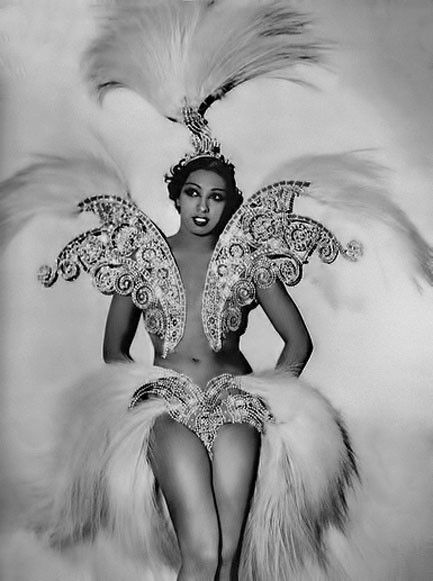
Born Josephine McDonald in St. Louis, Missouri in 1906 to vaudeville parents, Josephine witnessed the East St. Louis Massacre in 1917 at the age of 11. She dropped out of school the following year, married for the first time at 13, and aspired to be a performer, traveling to Harlem to join chorus lines. At 15 she married her second husband and became Josephine Baker. She divorced in 1925, retaining her name and launching her stage career in Paris the same year.
Josephine found instant fame in Paris theaters, capitalizing on nude and sensual dances while being humorous and charming. She performed in her infamous banana skirt for the 1st time in 1926. She became a prominent celebrity in Europe and began her singing career in 1930. The white American press snubbed her, and she gave up her American citizenship in 1937.
During World War II, Baker served as a spy and pilot for France. After the War, she resumed touring in America. She was crowned the NAACP’s Woman of the Year in 1951-- but when she called out American racism at the Stork Club in New York City in October, she was accused of being a communist by the columnist Walter Winchell and her visa was terminated. She supported the American Civil Rights movement from France & was the only female speaker at the March on Washington in 1963. She said,
"I have walked into the palaces of kings and queens, and into the houses of presidents and much more. But I could not walk into a hotel in America and get a cup of coffee, and that made me mad. And when I get mad, you know that I open my big mouth. And then look out, 'cause when Josephine opens her mouth, they hear it all over the world."
When Martin Luther King Jr. was murdered in 1968, Coretta Scott King asked the mother of 12 adopted children to take his place as head of the movement. Josephine declined.
1920s Black Artists

Do you want to conduct your own research on the Black 1920s? Check out this list from A-Z for inspiration!

Check out Intelexual Media Guides for details on how to do your own research.
In Black America Rewind: 1930s, we'll discuss:
The Impact of The Great Depression
Franklin D. Roosevelt's Relationship with the Black Community
Lynching
Litigation
Housing
Dr. Mary McLeod Bethune
Thurgood Marshall
& More!
Several sources have been linked throughout this post, but get ALL Sources on Patreon
Quote For Thought

"Therefore the Negro today wishes to be known for what he is, even in his faults and shortcomings, and scorns a craven and precarious survival at the price of seeming to be what he is not. He resents being spoken for as a social ward or minor, even by his own, and to being regarded a chronic patient for the sociological clinic, the sick man of American Democracy. For the same reasons he himself is through with those social nostrums and panaceas, the so-called "solutions" of his "problem," with which he and the country have been so liberally dosed in the past. Religion, freedom, education, money--in turn, he has ardently hoped for and peculiarly trusted these things; he still believes in them, but not in blind trust that they alone will solve his life-problem…."
-Alain Locke


Comments