


Black America Rewind: 1970s
Apr 8
30 min read
Our history will not be erased. In this series, we'll focus on important Black American history from the 1920s to the 1990s. Full posts are available here, but you can follow along with the abridged versions on Instagram, too.

It's safe to say that the 1970s brought unprecedented freedom and power to the average Black American. The community had voting rights, cultural powerhouses, and a blossoming of underground and Black Media-- plus the Vietnam War ended in 1973. But for many, a damaged economy, underhanded racism, stratified priorities, and ideological obstacles dampened the groove.
1970s Ripple Effects
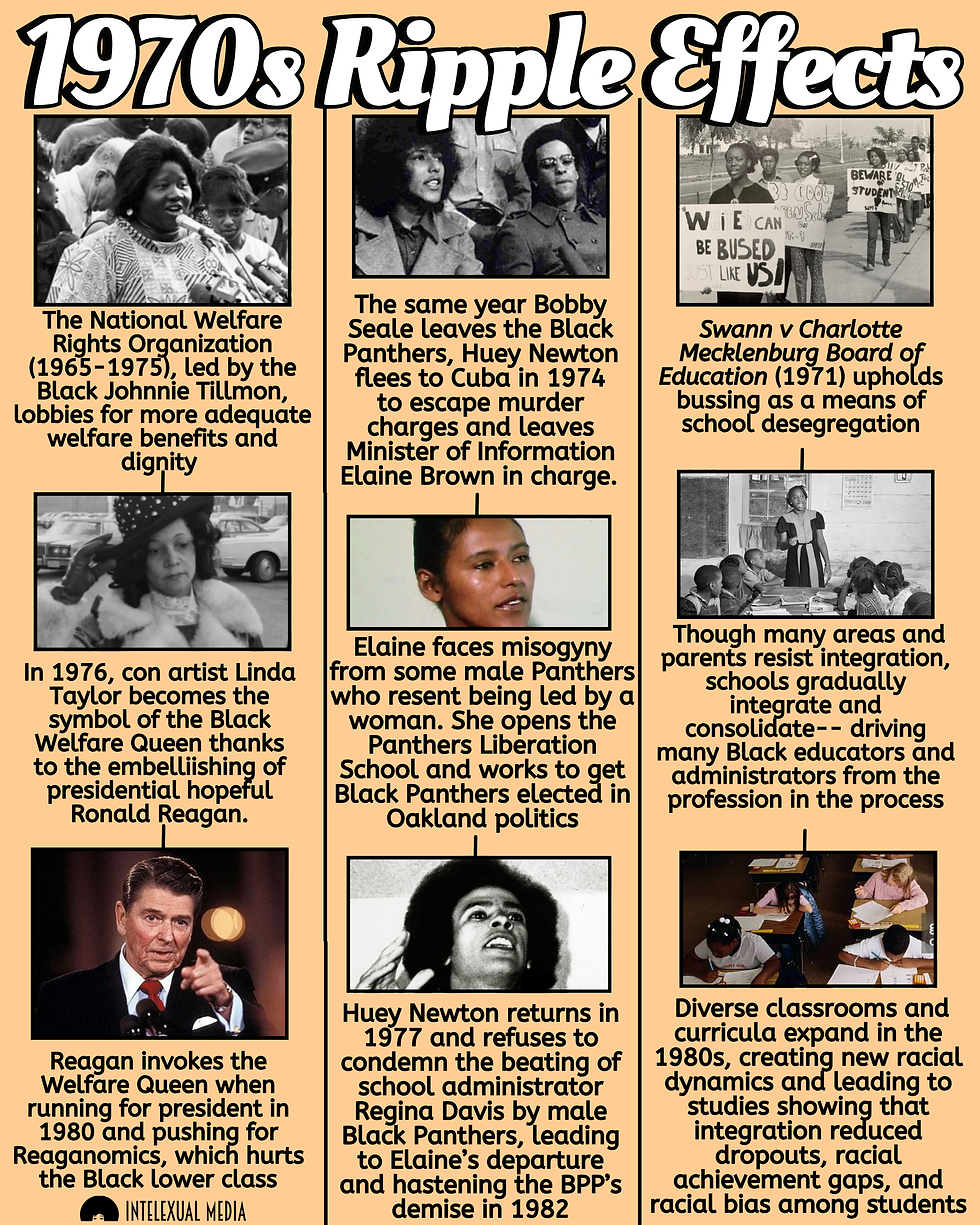
Important 1970s Events

Prioritization of Electoral Politics
The establishment of the Congressional Black Caucus in 1971 by thirteen Black members of Congress: Shirley Chisholm, Bill Clay, Walter Fauntroy, George W. Collins, Robert N. C. Nix Sr., John Conyers, Ron Dellums, Charles Diggs, Louis Stokes, Augustus Hawkins, Ralph Metcalfe, Parren Mitchell, Charles Rangel, and Louis Stokes
The National Black Political Convention in Gary, Indiana (1972) attracted 8,000 people
Throughout the Fall of 1970 and Winter of 1971, various black grassroots organizations elected delegates, raised money for transportation, and spread the word about the assembly. Radical black nationalists were the majority of the attendance, while moderates supporting integration and democrats were in the minority. The radical grassroots activists didn’t have the national visibility to spark change, and the black elected officials in attendance who did have the national visibility wanted to be re-elected and didn’t want to lose white allies. Plus, they believed real politics required compromise, not demands for revolution.
A Slew of Black Mayors
While a few Black mayors had emerged in the 1960s in small towns, the 1970s saw big cities with Black mayors. They had to deal with a combination of issues, including deindustrialization, petulant city councils, racist suburbs, and decreased federal funding. They were also often beholden to a delicate balancing act of appealing to Black citizens but not angering business interests and white people.

The Deterioration of The Black Panthers
With promising leaders like Fred Hampton neutralized by COINTELPRO and a fragmented ideology at the crossroads of the radical 60s and the chill 70s, the Black Panther Party barely made it out of the decade with less than three dozen members. To begin with, while the newsletter was successful (with a peak circulation of 300,000 by 1971), membership had peaked in 1969 at approximately 5-10,000. By the early seventies, the party had devolved, despite its best attempts to effect revolutionary change despite government opposition and propaganda. Huey Newton was a poor leader, and members like Minister of Education Raymond Hewitt objected to his increasing dominance.

In 1971, Huey Newton led a 10-day delegation to China as a guest of Mao Zedong. The same year, the man with whom Bobby Seale's wife was rumored to have been cheating with, was found murdered
At the same time, hundreds of members began quitting
Eldridge Cleaver disagreed with the party's politics and left with a splinter faction called the Black Revolutionary Army, which led to violent clashes between the two groups
The group was one of the few to support Shirley Chisholm in her 1972 quest for the Democratic presidential nomination against George McGovern
Most national chapters were closed by or during 1972, except for Oakland. The party focused on winning local elections and continuing community survival programs
In 1973, Bobby Newton ran for Mayor of Oakland as a democrat, coming in 2nd place with 20% of the vote
In 1974, white accountant Betty Van Platter was murdered, most likely by the Panthers, for 'meddling' in their taxes. The same year, Huey got rid of several members, Bobby left, and singer and Minister of Information Elaine Brown was elevated to Oakland chair when Huey fled to Cuba to escape murder charges. By this time, he was believed to be addicted to cocaine and had allegedly killed a 17-year-old sex worker named Kathleen Smith in front of another sex worker named Crystal Gray. Later, after returning to face the charges, Newton [allegedly] proceeded to try to have Crystal killed in 1977, which led to a bungled assassination attempt. Huey was acquitted of the murder of Kathleen Smith
Huey's misogyny is well documented, as former Panther Ericka Huggins said in 2007 that Huey had raped her
The party supported Lionel Wilson's successful 1977 bid to be Oakland's mayor
The Black Panther Party Newspaper ceased publication in 1980, and the party dissolved in 1982, amidst Huey's embezzling of funds
The Government Exposed

Revelations about COINTELPRO, the Tuskegee Syphilis Experiments, Watergate, and the Pentagon Papers from 1971-1974 fueled more government mistrust, voter apathy, and conspiracy theory culture in the Black community.
Despite spilling blood for voting rights in the 1960s, the percentage of voting-aged Black people who participated reduced from 52.1% in 1972 to 49% in 1976. While this was caused by a few factors generating apathy, the perfidy of the United States government was a significant driving force
Those who voted in the 1972 election were split. Most black voters endorsed white democrats, while CORE members, who were increasingly conservative, and members of the burgeoning black middle class, voted for Nixon because of his pro-business stances and support of Black capitalism.
While millions watched the Fight of the Century between heavyweight Joe Frazier and former undisputed heavyweight Muhammad Ali on March 8, 1971, activists in the Citizens' Commission to Investigate the FBI took advantage of the distracting spectacle to break into an FBI office in Pennsylvania, where they found documents that exposed COINTELPRO
The Nixon Presidency (1968-1974)

Because open racism was increasingly taboo, Nixon dogwhistled via The War on Drugs and Law and Order rhetoric, which encouraged overpolicing, criminalization, and mass incarceration. This would be accelerated during future presidencies
Nixon established the Office of Minority Business Enterprise, emphasizing minority franchising and Black Capitalism to further divide the Black middle and lower classes and prevent labor organizing. As time passed and income stratified priorities, the priorities of many Black voters shifted to be individualistic
Nixon allowed the military draft to end in 1973, leading to an increased recruitment of impoverished Black Americans whose eventual move to the middle class would make them key supporters of the American military complex
While he initially refused to meet with the Congressional Black Caucus until they generated publicity by boycotting his 1971 State of the Union Address, Nixon readily met with Black celebrities like James Brown and Sammy Davis Jr. to improve his image with Black people.
In 1972, Sammy Davis Jr. attended Mahalia Jackson's funeral as a 'representative' of Nixon and flew to Vietnam to entertain the troops ("You could hear bullets flying," remarked his assistant)
Wrote Wil Haygood:
"Davis's mission was twofold: entertain the troops, but also check up on reports of drug abuse. Civil rights leaders back in America were complaining that a disproportionate number of black GIs were being singled out for punishment when caught using drugs. Davis aimed to check up on the black soldiers. He went to a detoxification center. Many of the white GIs -- just as their parents had done back home -- howled appreciatively at Davis, slapping their knees, gazing. Many black GIs distrusted him. They read the Negro press; they knew Davis's image. Several in the detox unit -- never mind his marriage to Altovise -- made loud noises about his marriage to May Britt. Davis pleaded for understanding. But many rolled their eyes, complained to him about "the white man," about Nixon, about being hooked on dope. Standing next to Davis, listening to him offer counsel against drug use, Sy Marsh, who knew of Davis's own drug use at the time, could barely stifle a chuckle.
b. Sammy campaigned for Nixon's 1972 re-election campaign despite opposition from the Black community. Their awkward hug at the Republican Youth Rally generated hate mail to Sammy and a cold reception of boos and jeers at an Operation PUSH event he paid $20,000 to perform at... to unsuccessfully rehabilitate his image.
Rammifications of International Policy
American support of the Israeli occupation of Palestine led to oil and financial crises throughout the 1970s, which hurt poor Black Americans via the gas shortage, recession, and Black unemployment. Additionally, American foreign policy birthed a new era of terrorism and xenophobia that would impact Black Americans in the future.
The Wilmington Ten

On January 15th 1971, students at John T. Hoggard High School were denied a memorial for Martin Luther King Jr. Not only were many integrated schools like Hoggard dealing with racial tensions, but the 70s were also a fertile period of MLK resentment. White people fought tooth and nail to keep his legacy from being baked into the nation's fabric. At the time of his 1968 assassination, he had been one of the most hated Black men in the country. Wrote Lynn Burnett,
Congressman John Conyers — who worked closely with Rosa Parks, who relocated to Detroit shortly after the Montgomery bus boycott — was the first to propose celebrating a day in King’s honor. That was in a proposed bill four days after King’s assassination. Three years later, King’s organization, the Southern Christian Leadership Conference, presented a petition with three million signatures in favor of a holiday. However, the proposal met significant opposition: for King was deeply unpopular at the time of his death, with 72 percent of White Americans holding an unfavorable view of him. The civil rights community, led by his wife Coretta, pushed forward for fifteen years, meeting opposition the entire way.
As detailed in A 1970s History of True Crime, demanding a Martin Luther King Jr memorial, or threading him into curriculum, could and did lead to violence. So with this in mind, the students took a dangerous and admirable step-- they boycotted Hoggard High and another school. When Benjamin Chavis traveled to Wilmington to help the students organize, the Ku Klux Klan began riding around to intimidate people on the streets. They also shot at people and set fire to at least 20 buildings. When a white-owned store was firebombed on February 6th, the attending firefighters claimed they had been shot at by unseen snipers from Gregory Congregational Church. At the church, which served as an informal base of operations for the students, Chavis was with eight Black male students aged 18-19 and a 35-year-old white female social worker. In a nearby incident, cops killed a Black teenager named Steven Corbett. After a small riot, the national guard was ordered to enter the building and seize those inside. They claimed to have found guns and ammunition.
The Wilmington Ten, as they came to be known, were found guilty and sentenced to a combined 282 years, with Chavis receiving 34 years. He was only 24 years old. There was ZERO evidence implicating them in the crime, and at least one juror was a KKK member. Of the two Black witnesses who claimed they had bombed the white business, one later said he'd been bribed with a bike, and the other had a history of intense mental illness and recanted under cross-examination. Despite this and numerous appeals, the Wilmington Ten remained in prison until 1979, even after testimony in 1977 from the witness who admitted he had been bribed and a 60 Minutes special detailing how the evidence against the Wilmington Ten was fake.
Deindustrialization and Urban Decay
Northern inner cities struggled with white flight, a loss of tax and business revenue, as businesses moved to the anti-labor Sunbelt, taking jobs with them.
Cities that had once relied on singular industries-- like Detroit and automotives-- suffered as international trade and imports flourished
As discussed by Robin D.G. Kelly and Earl Lewis, "While the number of unemployed white workers declined by 562,000 between 1975 and 1980, the number of Black unemployed increased by 200,000 during this period-- the widest unemployment gap between Blacks and whites since the government started keeping such statistics."
Black inner-city neighborhoods saw an increase in liquor stores and fast food establishments and a reduction of public services. The early 70s also saw a rise in graffiti, though this was common in many urban areas and not just among black youth. The artist Jean-Michel Basquiat cut his teeth in the late 70s by creating graffiti in Lower Manhattan when the MTA was spending $400,000 a year cleaning trains.
When troops returned from Vietnam in 1973, many Black men struggled with Post-Traumatic Stress Disorder, drug addiction, joblessness, and a hostile American public
As American cities suffered, Black Americans also began migrating back down South, in a reversal that would come to be known as the New Great Migration.

The Carter Presidency (1977-1981)


Jimmy Carter had grown up on a peanut farm in the predominantly Black Archery, Georgia, where he engaged so often with Black children and workers on his farm that his white peers teased him for "sounding Black." In his early political career, Carter was one of many white southerners who did little to challenge the racial status quo. When running for Governor of Georgia in 1969 and 1970 after losing in 1966, Jimmy Carter had no problem aligning himself with segregationists and using racist dog whistles about law and order, putting voters at ease. However, he refused to join the white supremacist Citizens Council during it's heyday; and along with his wife Rosalyn voted in favor of integration at their church. After being elected, he declared,
"At the end of a long campaign, I believe I know our people as well as anyone. Based on this knowledge of Georgians North and South, Rural and Urban, liberal and conservative, I say to you quite frankly that the time for Governor Jimmy Carter’s Inaugural Address – January 12, 1971 1 racial discrimination is over. Our people have already made this major and difficult decision, but we cannot underestimate the challenge of hundreds of minor decisions yet to be made. Our inherent human charity and our religious beliefs will be taxed to the limit. No poor, rural, weak, or black person should ever have to bear the additional burden of being deprived of the opportunity of an education, a job or simple justice."
Carter followed his declaration by welcoming more Black Americans into Georgia's government and cozying up to Black clergy, Coretta Scott King, and leaders like future Atlanta mayor Andrew Young. When Carter ran for the presidency in 1976, he won 83% of the Black vote-- many of whom forgave his "ethnic purity" blunder when discussing neighborhoods with white voters. They embraced his religiosity, too. George Skelton detailed how Carter advanced from 4% of the democratic primary when initially running to his eventual victory, thusly:
"Campaigning in the Wisconsin primary in Milwaukee one morning, I heard Carter outline a stance on school busing that seemed to please a predominantly Black church congregation. Then at noon, speaking to white voters at a bowling alley, he got nods of approval by asserting that busing should be voluntary and locally controlled."
As president, Carter:
Appointed Andrew Young as the first Black United States Ambassador to the United Nations. However, Andrew Young was pressured to resign from his position in 1979 after having an unauthorized meeting with the Palestinian Liberation Organization
Henry Kissinger had told Israel in 1975 that the U.S. Government would refuse to recognize or negotiate with the PLO until it recognized Israel's 'right' to exist
Wrote Jimmy Carter in his diary: “I learned that Andy [Young] has gotten himself into serious trouble by meeting with the UN PLO representative. This is understandable because Andy is president of the Security Council, but when interrogated about it by the State Department, he told them a lie. Later, he told the Israeli ambassador the truth and the Israelis very unwisely made this fact public, although Andy’s meeting with the PLO was certainly designed to help the Israeli cause. This is an almost impossible problem to resolve without Andy leaving.”
Established the U.S. Department of Education and doubled the amount of federal money being used on education, both of which would become targets of white conservatives
Carter retained 80% of the Black vote in his failed presidential bid in 1980 against Ronald Reagan.

The Exoneration of Joan Little

Joan Little was born in the small town of Washington, North Carolina, to an emotionally abusive and unstable mother, who tasked her with caring for her ten younger siblings. Unhappy and rebellious, she often ran away from home and became acquainted with social workers and the legal system. At 14, her mother requested that the state send her to a training school (akin to a juvenile prison). She escaped and was arrested several times in the early 1970s for things like petty theft and possession of a shotgun.
In August 1974, while imprisoned in North Carolina’s Beaufort County Jail, 21-year-old Joan killed a 62-year-old white guard named Clarence Alligood who forced her to perform oral sex under threat of an icepick. After killing him, she fled, becoming a fugitive who could be killed by law enforcement on sight. She turned herself in and was charged with first-degree murder-- which carried a death penalty sentence. Her case attracted support from feminist groups, black and white, straight and lesbian-- and even groups as diverse as the Southern Christian Leadership Conference and the Black Panther Party. As detailed by Christina Greene in She Ain’t No Rosa Parks”: The Joan Little Rape–Murder Case and Jim Crow Justice in the Post–Civil Rights South, this was an uphill battle that required the dissemination of propaganda, liberal cash infusions, and sustained outrage. It also required a highly detailed legal strategy, like one of Joan's attorneys made her carry around To Kill a Mockingbird to fortify that anything but an acquittal would be a racist injustice.
In 1975, Angela Davis penned Joan Little: The Dialectics of Rape for Ms. Magazine, detailing why everyone should support Joan. Joan’s defense expertly supplied the female-majority jurors with background information on chronic sexual abuse and harassment in prisons and discussed the white guard’s past violations. The jury took less than an hour to deliberate. Joan Little was acquitted, setting a precedent for killing one’s potential rapist being justified, as she was the first woman ever exonerated.
1970s Quick Facts & Cost of Living
Black population by 1970: 22.6 million (11.1% of the U.S.)
Black Female Birth Rate by 1970s: 74.8 per 1000 women
Black Female Marriage Rate by 1980: 30%
Black Female-Led Homes: 28% in 1971 to 41% in 1982
National Divorce Rate by 1980: 22.6% per 1000 marriages
Interracial Marriage Rate by 1980: 3.2% of all unions, with 5% of Black married men to white women
Black Owned Businesses (1977): 231,203
Black businesses and revenue were on the decline between 1972 and 1977 as corporations expanded and integration flowed
Median Annual Family Income (1975):
White: $14,268 Black: $8,779
Black Families Below Poverty Line (1980): 32.5%
The # of Black homeowners jumped from 2.6 million to 3.7 million
Common Jobs: Factory work, military service, caregivers, nurses, manual laborers, machine operators, office administration, beauticians, barbers, local retailers, sharecroppers, salesmen
States With Biggest Black Populations: Mississippi (35%), South Carolina (30%), Louisiana (29%), Georgia (27%), Alabama (26%), Maryland (23%), and North Carolina (22%).

Important 1970s Ideas
The Black Aesthetic

The wins of the 1960s, plus the rise of Black celebrities, intellectuals, and media, meant higher expectations of Black authenticity and a more diverse public identity
The Black Aesthetic (1971) implored Black artists to create and critique art by our own standards
Black art, literature, and music were often celebrated for being complex and no longer beholden to white respectability politics
Building off the previous decades’ ‘Black is Beautiful’, a rejection of the white aesthetic was shown in Afrocentric hairstyles and fashion
Black pride would be lucrative for white companies, as they appropriated language, fashion, and ideas for consumer products
Embodying cultural aesthetics did not mean one’s politics were radical or even liberal
Many people turned to black cultural nationalism, insisting that Black people should adopt traditional African culture. There was a rise in dashikis, the adoption of the 1966 creation Kwanzaa, and, among more radical circles, an increased suspicion and skepticism of assimilation and integration, because often it meant kicking black culture to the curb for white culture and acceptance. However, separatism didn’t catch on with most Black people (in fact, polls showed that whites favored a separate black nation more than we did).
Black Feminism

Because of discontent with misogyny in Black nationalist and/or Civil Rights spaces and racism in feminist and/or leftist circles, Black women began building the ideological framework for addressing the unique issues Black women had been facing and loosely documenting since the 19th century.
Florynce Kennedy was a lawyer and activist who was one of the founding members of the National Black Feminist Organization, along with Margaret Sloan Hunter. Kennedy, who supported the Attica Prison Rebellion and protested for more female bathrooms at Harvard with fake urine, was dubbed "The biggest, loudest and, indisputably, the rudest mouth on the battleground," by People Magazine in 1974
Toni Cade Bambara was a contributor of the Black Arts Movement, edited 1970's The Black Woman, and started the Southern Collective of African American Writers in Atlanta
Alice Walker was a burgeoning writer and poet who coined the term ‘womanism’ for Black women
Activists, poets, and writers like Barbara Smith, Pat Parker, and Audre Lorde were key pillars of Black Lesbian Feminist thought
The Combahee River Collective was founded in 1974 in Boston by Barbara Smith and other Black feminists who felt more radical than the National Black Feminist Organization
Shirley Chisholm, whose pursuit of the presidency was groundbreaking, was also an outspoken advocate of Reproductive Rights

The Controversy of Roots

Alex Haley had earned his place in the cultural landscape by becoming a prolific interviewer and editor for Playboy Magazine, along with ghostwriting the 1965 Autobiography of Malcolm X. But, it was his 12 years of work on the Pulitzer Prize-winning Roots: The Saga of an American Family that solidified his standing. His 1976 masterpiece was an important work for a plethora of reasons.
It was one of the first mainstream works of fiction to describe the horrors of the Middle Passage
It was a New York Times bestseller--with over 15 million hardcovers sold within seven months
The 1977 ABC miniseries based on the show drew in millions of viewers over eight nights and starred then and future heavyhitters like James Earl Jones, John Amos, Levar Burton, Cicely Tyson, OJ Simpson, and Maya Angelou
It was nominated for 37 Emmys and won 9
The series popularized genealogical research and keeping a family history amongst the general public
The production of Roots was billed as being rooted in authenticity that would shock viewers out of their reverie or apathy about slavery, with the New York Times reporting:
“Roots” is a risky enterprise, both artistically and commercially... the filmmakers’ insistence on authenticity requires some female nudity. Finally, there is the possibility that the unsparingly accurate depiction of slavery could prove repugnant to home viewers.... Producer Stan Margulies, who has devoted 20 mouths to this project, said recently in an interview on the set that a “gond taste” agreement had been negotiated with ABC that permitted the filming of a scene in which the breasts of the enslaved women would he visible. “The measure of taste in that scene is that the nudity passed almost unnoticed when we saw the footage,” he said....
Humanizing Black Americans and their past made the miniseries and book important to the 1970s. Added the Times,
"The scene on the slave ship is as strong a scene as ever has been shown on prime‐time commercial television,” Margulies said. “It's so strong that some people might tune out. Our fervent hope is that the audience will care so much about LeVar [LeVar Burton, a University of Southern California theater student, plays young Kunta Kinte] and about the slaves in general that they will stay and see.
People did stay and see. But how did they react? Wrote C. Gerlad Fraser in 1977,
A nationwide telephone survey of 1,000 viewers conducted by the Center for Policy Research in New York has found that after watching the series, a sizable number—42 percent of those queried—believed “Roots” would be “inflammatory.” The sociologists, John Howard, George Rothbart and Lee Sloan, said their survey found that “blacks were more than twice as likely as whites to believe that whites would feel guilt, shame and anger at what happened to blacks.” In addition, they said, many white viewers thought that “Roots” would increase black prejudice, racism, hatred, bigotry, hostility, anger, bitterness and rage.” Many white‐collar black viewers also believed this. Neither assessment was accurate, the sociologists said. “The actual effects were the same for both blacks and whites,” they said. “The predominant emotional response being sadness.” The survey also reported that 60 percent of black and white viewers “indicated believing that they had an increased understanding of the psychology of black people.”
Historian Matt Delmont studied a large volume of letters sent to newsletters after the original Roots broadcast, finding that many were soaked with white guilt. He told Rebecca Onion in a 2016 interview,
"...There’s a big difference between the book and the TV series. For the TV series they added in more white characters, because they were concerned that white viewers won’t watch if they don’t have famous white actors in the series. They have Ed Asner show up, he’s in there after 10 minutes as the slave [ship] captain, as well as a number of other very popular white TV actors of the time … I think it prompts more of a sense of white guilt than the book did. For the book, the white characters are almost irrelevant. You’re 250 pages into the book before there’s a white character with a proper name. Before that they’re all just called toubab. But for the TV series they had to make the white characters more compelling."
The Roots miniseries generated more book sales in the months that followed, but other controversies came too. Some historians and genealogists disputed Alex Haley's version of events, which he initially presented as entirely corroborated by research. However, some details were fudged for convenience. An April 1977 article by Mark Ottoway titled Tangled Roots cast serious doubts on Haley's ancestry and the timeline of Kunta Kinte. Over time, Haley and the public engaged with Roots as a work of historical fiction instead of historical non-fiction. Haley was also sued for plagiarism by an anthropologist named Harold Courlander and Jubilee author Margaret Walker Alexander. Haley admitted to copying passages from Courlander's 1967 book The African, and paid $650,000 to settle the suit. Margaret Walker Alexander's suit was dismissed.
1970s Cultural Forces
Even while the political power of Black people ebbed and flowed, our talent, coolness, and ingenuity were important tools in American soft power via music, sports, and television. Popular culture and media were increasingly central to the nation's identity and propaganda in the second half of the century-- and during the seventies, Black ideology and leaders began to be pulled from stages, fields, courts, and other arenas of entertainment.

1970s Racism Tracker
Though we gained some federal protections against racism in the 1960s, subsequent decades (including the 1970s) would show how fiercely white America would attempt to hold on to old ways of life.
Milliken V Bradley (1974)

Detroit’s schools remained mostly segregated because of underhanded manipulation and housing discrimination. This 1974 court case authorized De Facto segregation in American schools despite the Brown v Board of Education ruling, saying that suburban segregation, or white people fleeing to areas where they refused to sell homes or land to black people and other minorities, was unintentional. The case struck down Detroit’s plans to integrate schools by busing in students across 53 district lines, ruling that the City of Detroit could use busing within city limits but had to leave the suburbs out of it.
Boston Desegregation Busing Crisis (1974)
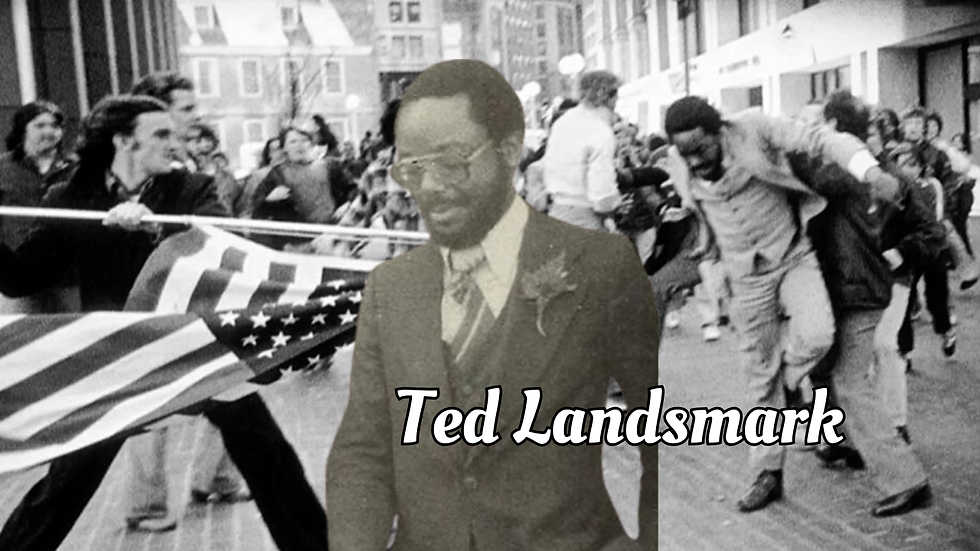
When ordered to desegregate its schools via busing in 1974, white Boston parents led a sustained protest by sending their children to private schools, leading racist sit-ins, and instigating at least 40 riots by 1976. Black and white students violently clashed in schools while Black citizens like Ted Landsmark were attacked in the streets. The photo in the background of the above graphic is called The Soiling of Old Glory, and is a Pulitzer Prize–winning photograph taken by the Boston Herald's Stanley Forman.
Kanawha County Textbook Wars (1974)


Kanawha County, West Virginia, native and ringleader Alice Moore first entered education policy in 1969 when advocating for the removal of newly implemented sex ed courses. With a narrowly religious worldview that matched that of her neighbors, Alice Moore succeeded in rebuking comprehensive sex education and was elected to the school board in 1970.
In April 1974, a set of books, which included black authors like Malcolm X, Langston Hughes, and James Baldwin, was presented to the school board for adoption in the Language Arts Program. After looking over the list in disgust, Alice rallied the wealthiest moms in town against the list. Moore was particularly displeased with Malcolm X’s disapproval and critiques of Christianity. According to Joe Kincheloe, “Moore argued that the language arts goal of emphasizing the racial, cultural, and philosophical diversity of American society was from her perspective anti-Christian, anti-American, anti-authority, depressing, and negative.” What would ensue would be a long and violent battle to get the books from being adopted. While later generations would claim the incident wasn’t racist, a building in the county was painted with the words, “Get the nigger books out!” The National Education Association reported in 1975 that “teachers have received complaints from parents about illustrations in textbooks depicting a white female student and Black male student together.” James Baldwin's works were targeted for allegedly being “anti-white.”
By the time of the next school board meeting in June, over 1000 angry white parents had assembled. With Alice Moore at the helm, they presented a petition signed by at least 12,000 locals to prohibit books that encouraged skepticism in “the family unit which comes from the marriage of a man an a woman, belief in God, the American political system, the free enterprise economic system, and the history of America as ‘the record of one of the noblest civilizations that has existed.’” The school board agreed not to buy eight books but decided to adopt the rest into the curriculum as planned. In the months that followed, windows at the School Board of Education were shattered by shotgun blasts and 10,000 miners walked off the job to protest the “dirty books.” By September, “two men were shot, car windows were smashed, news teams were beaten, and vandals inflicted around 300,000 dollars of damage on the schools.” Cars were burned, and protesters blocked buses from carrying students to school. In October, the Board of Education building was bombed by the anti-textbook brigade. While the books were eventually adopted (with the most controversial being reserved in school libraries to be accessed with parental permission), the bloody battle to keep them out of classrooms demonstrates how white Americans center their history and narratives.
Bob Jones University

Established in 1927 by the evangelical preacher Bob Jones, the small conservative South Carolina private school never admitted Black students until 1971, when it's tax exemption status was thrown into jeopardy by the Internal Revenue Service. Until 1975, it had a rule permitting the enrollment of Black married couples but refused all others. The 1971 enrollment of the school's first Black student, a married Black man, didn't dampen allegations of racism. Two Black students were enrolled in 1976, including an unmarried man named Willie Thompson, who reportedly attended the Republican National Convention. The timing of enrolling Willie and the other student (from Barbados) was calculated shortly before 1976's Runyon v. McCrary, which banned racism in private school admissions. To cope with the potential of Black singles on campus, BJU added new rules prohibiting interracial dating and marriage. The IRS revoked the school's tax-exempt status, which led to a 1983 Supreme Court case that the school lost.
The Greensboro Massacre (1979)

A pro-union group of socialists called the Workers Viewpoint Organization began trying to unionize people in Greensboro, NC
This led to threats by the Ku Klux Klan and area Nazis (National Socialist Party of America)
The WVO became the Communist Workers Organization and held a ‘Death to the Klan’ rally on November 3, 1979. In the months before, the two sides traded violent threats
As cameras rolled, approximately 40 Klan and Nazi members attacked and shot at protesters, who then began shooting back
4 CWO members, including Bennett College student Sandra Lee Neely Smith, and an additional supporter, were killed
9 other CWP members were injured, plus a KKK member and two members of the media
Coverage of the event was broadcast nationwide
Though the CWP had permission to hold the protest, no police officers served as a buffer between them and the Klan, and later testimony in 1985 revealed that police knew about the KKK and Nazi's plans and had been told to steer clear
The CWP protest permit disallowed the carrying of weapons
Undercover law enforcement and informants had infiltrated both the Klan and the groups to start the violence
The Klan and Nazi defendants were acquitted by all-white juries
The victims and survivors were assailed at trial for being communists, while the Klan and Nazis were painted as valiant heroes fighting a communist threat. Reported The Washington Post:
"Both sides were guilty," said juror Robert Lackey, a diesel mechanic and 22-year Marine Corps veteran who held out to the end for a guilty verdict, then gave in. Lackey was among five jurors who initially felt the men were guilty of at least second-degree murder or voluntary manslaughter, both noncapital offenses. "But," he concluded, 'how can you say one side is guilty when everyone is guilty? Those folks who watched [the videotapes] on TV at home didn't see all the evidence I saw, that we all saw. . . I don't like the Communists and I don't like the Nazis or the Klan. They're despicable, all of them. The only thing we based our verdict on was the facts, the evidence."
Added the reporter:
The Klansmen and Nazis reached into trunks packed with awesome fire power -- three pistols, four 12-gauge shotguns, a semiautomatic rifle -- and opened fire. Within 88 seconds, 39 shots were fired in all, and five Communists lay dead or dying. No Klansmen were hurt. All this came out at the trial... Both sides got what they wanted in the end, says Charles Wittenstein, Atlanta-based southern counsel of the Anti-Defamation League. Klansmen and Nazis can now trot out their new "heroes" who gunned down five "dirty commies" and went free to brag about it. The Communists, well-educated radicals who continued their college protest ways, can be expected to tout their five dead "martyrs" as proof that there is no such thing as justice under capitalism, a recruiting aid to enlist fellow revolutionaries."
Though four of the victims were non-Black, the acquittals scared some Black people in the area, who realized that problems of the past were present in 1979
Said Greensboro NAACP director George Simkins, the verdict was "tantamount to a license for Klan and Nazis to kill anyone they want," remarking that Black people in the area were "arming themselves for their own protection."
In federal trials in the 80s, one man, Mark Sherer, was given 6 months in prison and 5 years' probation for firing the first shot. Nobody else served time for the murders
One victim's widow, Marty Nathan, sued the city and a mix of Klan members, law enforcement, and nazis, arguing that "[police knew] that Klansmen and Nazis would use violence to disrupt the demonstration by Communist labor organizers and black residents of Greensboro but deliberately failed to protect them."
She was awarded a paltry $351,000, which was split among the others impacted
A Truth Commission by the city in 2004 pointed out how police viewed the communist protesters in comparison to the racists, writing, "This fear of vocal black activists who advocated armed self-defense but who had no criminal record other than disorderly conduct, stands in stark contrast to the dismissal of the threat posed by Klansmen and Nazis who openly advocated and had a criminal record of committing racist violence."

1970s Figure Spotlight: Angela Davis

Born in Birmingham, Alabama, on January 26, 1994, into a middle-class family with a mother in community organizing, Angela Davis was a childhood Girl Scout with a love of reading and learning. She was studying French literature and Philosophy in 1963 when she learned of the bomb that killed four girls in her hometown. This was one of many formative experiences that informed her politics, along with living in Paris, learning about Karl Marx, living in West Germany, and organizing with Black nationalists who rejected communism as “white". She earned her master's degree in philosophy from the University of California, San Diego in 1968, the same year that she became involved with Black radical groups like the Black Panther Party.
She joined the Communist Party of the United States in 1969, the same year she was hired to teach philosophy at the University of California, Los Angeles. She was fired, however, because of a state law banning communist teachers at state-funded universities. She had been identified by an undercover FBI agent on the campus. She challenged this in court, got the law overturned, and was eventually rehired, but was ultimately forced out of her position.
In 1970, Jonathan Jackson stole her legally registered guns. He intended to break his brother George, considered a political prisoner, with two others, Fleeta Drumgo and John Clutchette, from Soledad Prison in Marin County, California. Two accomplices, plus Jonathan and Judge Harold Haley, were killed in the process. The FBI issued a warrant for Angela's arrest and put her on their Ten Most Wanted List, even though she wasn’t involved. Nixon denounced her as a terrorist. She was arrested on October 13, 1970, and spent the following 18 months in jail, while Free Angela buttons, posters, and t-shirts became popular.

When the middle-class Ebony Magazine placed Angela on its 100 Most Influential list, a few feathers were ruffled. But, the magazine expounded on her for its July 1971 issue, publishing her essay Rhetoric v Reality, which prompted a reader from Blacksburg, Virginia to write to the editor,
"For those readers (Black and white) who questioned Angela Davis' qualifications for being placed on EBONY'S "100 Most Influential" list, I hope your ques- tions were answered after reading "Rhe- toric vs. Reality" by Angela Davis, July 71. She is a fine example of the intellectual achievements of black youths today. It is only too sad that 106 years since the Civil War, blacks still cannot express their beliefs if contrary to the values of the white majority. She talked and stood up for what she believes and is being quietened by the same white racist society which silenced King and the Kennedys. Where is your black power, black people? Not in economics, but in the leadership ability of our people."
The comment was posted under another letter from Inglewood, California, denouncing Angela as "the anti-Christ revolutionist", accusing the magazine of falling into "communist ideology." Alongside Angela's essay, Charles L. Sander's article, The Radicalization of Angela Davis, received enthusiastic praise from Black readers who didn't align with her politically but supported her right to exercise her political rights. She was released from jail in February 1972 on a $102,000 bail and was eventually acquitted of all charges. She continued in academia and activism and appeared in numerous media programs to provide commentary. In addition to being one of the few early and vocal supporters of Palestinian liberation from Israel, she became a pioneering scholar on prison abolition, socialism, and feminism.

On September 10, 1977, Angela radio broadcast a message of support to Jonestown cult members and homicidal leader Jim Jones, relating the Guyana commune to Benjamin Chavis and the Wilmington Ten, saying, "I know you are in a very difficult situation right now and there is a conspiracy....we are with you, and we appreciate everything you have done. And we know you are going to win, and, in the final analysis, we are all going to win." In November the following year, over 900 people died when Jones ordered the execution of a suicide pact. Huey Newton was also a supporter of Jim Jones and the People's Temple, and his cousin and Temple member Stanley Newton was one of the few to escape Jonestown alive.

The victims were disproportionately Black, with archivist Rebecca Moore describing that "Black females made up the largest group of residents of Jonestown (45%), with white females comprising 13%. Black males made up over one-fifth (23%), with white males making up a tenth, and the remainder falling in the Mixed or Other categories." The legacy of Jonestown has been whitewashed and whittled of it's broader socio-political implications in mainstream narratives, as well as been distanced from Angela Davis's complicated, though still impressive legacy.
1970s Black Education Fast Facts

The proportion of Black high-school graduates increased from 53% to 79% between 1970 and 1982. The number of Black college students doubled to 1 million (from 7 to 11% of the total population)
In 1970, 15% of Black people aged 25 to 34 had completed at least one year of college, compared to 31% of whites in that age group. In 1982, 36% of Blacks in the age group had completed some college, compared to 46% of whites.
Historically Black Colleges and Universities continued to be important sites of Black academia and political outreach
By the mid-70s, HBCUs awarded 35% of all bachelor's degrees and 21% of master's degrees earned by Black students nationwide.
At the same time, 75% of Black college students began attending white institutions
Black male enrollment at HBCUs peaked at 38% in 1976 and has since declined
While Black enrollment in undergraduate studies was on the rise, by 1976, there was a smaller proportion of blacks in graduate and first-professional schools than there had been in the early 1970s
The number of Black people receiving master's degrees declined by 16%
Top 1970s Trends, People, & Performers

There are tons of other performers I could mention, including Roberta Flack, Minnie Riperton, Sister Sledge, Natalie Cole, and Gladys Knight and The Pips, but check out this 1970s Black Women in Music Playlist!

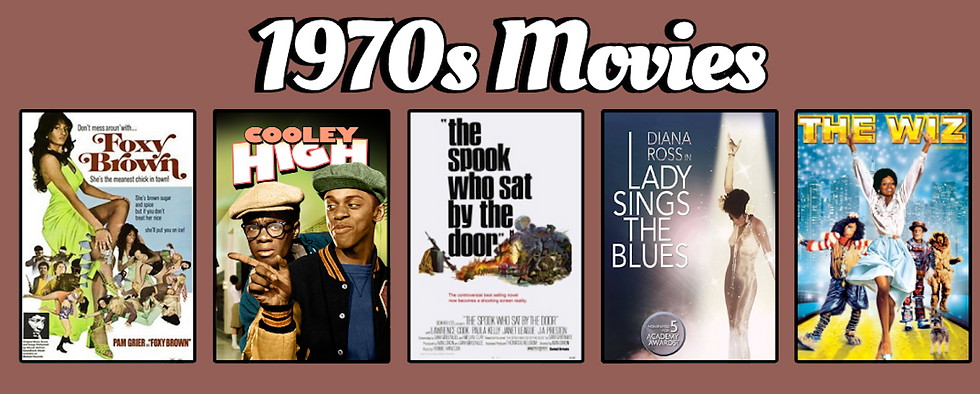
1970s Black Figure Spotlight: Toni Morrison

Born in 1931 in Lorain, Ohio to working-class parents who enchanted her with folk tales, ghost stories, and songs (and who mistrusted white people but lived on amicable terms in the same neighborhood as them) Chloe 'Toni Morrison' Wofford first encountered segregation as a Howard University English student while working in Washington D.C. from 1949-1953. While obtaining her education at the historically Black school, she was subjected to white culture as the standard. She mentioned in a 2012 interview with Christopher Bollen,
"They didn’t teach African-American writers even at African-American schools! I went to Howard University. I remember asking if I could write a paper on black people in Shakespeare. [laughs] The teacher was so annoyed! He said, “What?!” He thought it was a low-class subject. He said, “No, no, we’re not doing that. That’s too minor— it’s nothing.”
Additionally, as a member of the Howard Players theater group, Toni encountered more life-defining experiences about the Black condition while touring the Deep South. After obtaining her master's in literature in 1955, she spent the next chunk of her life as a professor and senior editor at a division of Random House publishing company. As senior editor, Toni had the opportunity to elevate Black writers, including Angela Davis, Toni Cade Bambara, and Huey Newton. She said, "I wasn’t marching. I didn’t go to anything. I didn’t join anything. But I could make sure there was a published record of those who did march and did put themselves on the line." She also compiled 1974's scrapbook The Black Book, which featured patents, photos, and more, and became a household and library staple for those interested in Black history. In 1975, she published an essay titled Looking For Zora, which helped renew attention to Zora Neale Hurston’s 1937 novel, Their Eyes Were Watching God.
All the while, Toni "stole time" to write her own fiction. Her first novel, the devastating The Bluest Eye, was published in 1970 when she was aged 39. Only 2000 hardcover copies were printed, and the reviews were mixed to negative. In the same 2012 interview with Christopher Bollen, Toni explained her thought process behind The Bluest Eye:
Morrison: This was back in the day of the “screw whitey” books. One of the aggressive themes of the “screw whitey” movement was “black is beautiful.” I just thought, “What is that about? Who are they talking to? Me? You’re going to tell me I’m beautiful?” And I thought, “Wait a minute. Before the guys get on the my-beautiful-black-queen wagon, let me tell you what it used to be like before you started that!” [laughs] You know, what racism does is create self-loathing, and it hurts. It can ruin you
BOLLEN: So by telling the story of a girl who wants blue eyes and thinks she’s ugly, your first novel was really out of step with the whole “black is beautiful” program. Does that mean some of your earliest critics were from the black community?
MORRISON: Yeah, they hated it. The nicest thing I ever heard wasn’t from a critic, it was from a student who said, “I liked The Bluest Eye, but I was really mad at you for writing it.” And I said, “Why?” And she said, “Because now they will know.” But most of them were dismissive. I thought that in that milieu, nobody was going to read this. Twelve-hundred copies they printed, 1,500. I thought it would be 400. Bantam bought the paperback. It was a throw-away book. And then something extraordinary happened. I think it was City College. The book was published in ’70, and City College decided that the curriculum for every entering freshman would have to include books by women and books by African Americans, and I was on that list. That meant not just for that class, but many classes thereafter!
Seven more novels would follow, including 1973's Sula and 1977's Song Of Solomon, which was critically acclaimed and made her famous. Morrison enjoyed extensive press coverage and had a distinguished public speaking career. She won a Pulitzer Prize for her 1987 bestselling novel Beloved, and won a Nobel Peace Prize for Literature in 1993. She continued to be a groundbreaking author and literary critic, and benefited from The Oprah Effect in the late 90s. She also served as the standard for Black female-written literary fiction.
The Afrosheen Empire

George Ellis Johnson Sr. and his wife Joan started the Johnson Products Company in 1954 with a $500 loan. The cornerstone of the company was Ultra Sheen, for women with straightened hair. He unveiled Afro Sheen in the late 1960s, when the 'Natural', or afro, was taking off. Afro Sheen ads of the early 1970s emphasized Black beauty and natural hair, embodying hallmarks of the Black Aesthetic and racial pride. JPC began sponsoring the television show Soul Train in 1971, bringing both a larger audience and a consumer base-- plus giving an important spotlight to Black musicians. Johnson Product Company was the first Black-owned company to go public and be listed on the American Stock Exchange in 1971. There were $40 million in sales in 1976, and the company was Black-owned until 1993.
1970s Black Artists

Do you want to conduct your own research on the Black 1970s? Check out this A-Z list for inspiration!

Check out Intelexual Media Guides for details on how to do your own research.
In Black America Rewind: 1980s, we'll discuss:
Ronald Reagan
Rising Black Influence
Thriving Black Culture
& More!


du doan xsmb mình thấy bạn bè hay nhắc nên ghé thử cho biết, kiểu lướt nhanh như người dùng bình thường thôi. Vào trang cái là thấy họ để bài theo ngày khá rõ, có tiêu đề “Soi cầu MB ngày 16 8 2026” nên mình không bị lạc đang đọc ngày nào. Nội dung bên dưới chia thành mấy đoạn ngắn, có heading nổi bật nên kéo xuống đọc đỡ mệt, nhìn qua là nắm được phần dự đoán XSMB hôm nay đang nằm ở đâu. Mình cũng thích cái cảm giác bố cục gọn gàng, không nhồi chữ liền một cục. Nói chung không cần rành soi cầu vẫn xem được vì các tiêu đề theo ngày…
Mình mua xổ số chủ yếu để thư giãn, kiểu xem cho vui thôi chứ không đặt nặng chuyện trúng đậm. Trước đây nghe người ta nói đủ loại “cầu kèo” này kia, lúc đầu mình thấy mơ hồ lắm, nhưng theo dõi một thời gian thì cũng nhận ra đôi khi có vài dạng hay lặp lại nên tò mò thử. Có lúc rảnh mình đọc mấy bài soi, rồi ghi vội vài ý để tự kiểm tra lại kết quả, xem có phải mình đang tự huyễn hoặc không. https://soicauxsmb.io/lodeonline-soi-cau-lo-de-online.html Thỉnh thoảng trúng được chút thì vui thật, nhưng cũng nhiều bữa trật hẳn nên mình luôn nhắc bản thân đừng tin quá. Nói chung coi như thêm…